Open-world survival sim · review
WildCraft: Animal Sim Online
The largest range in this catalogue, guarded by the least patient opening.
- What it is
- Open-world survival sim
- Developer
- Turbo Rocket Games
- Platform
- Android
- Content rating
- Parental Guidance
- Typical sitting
- 30-60 minutes
- Entry barrier
- Steep; expect a rough first hour
- How it is played
- Online range with solo play throughout
- Last updated on Google Play
- Aug 25, 2026
- Google Play average
- 4.5 from 1.22M ratings
The developer, content rating, star rating and update date above come from the Australian Google Play listing, checked on 10 September 2026. What it is, typical sitting, entry barrier and how it is played are editorial judgement rather than store data.
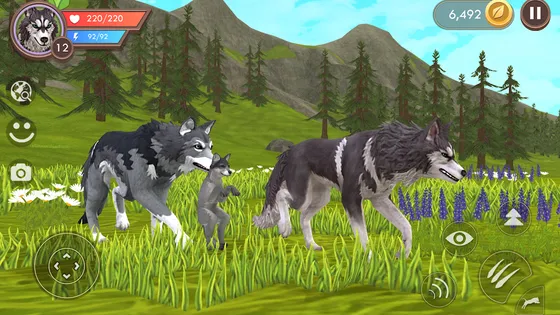
WildCraft is the veteran here and it plays like one: broad, slightly creaky and far more generous than its first hour suggests. You pick your animal, you are dropped onto open ground that keeps going, and three gauges start falling immediately. There is no ridge, no orientation walk, no moment to look around. The first hour is a scramble.
Survive that hour and something opens. The range turns out to be layered - river flats, high rock, snow line - and the wolf turns out to handle quite differently from the other animals on offer. It is the most game-like entry in this catalogue, for better and for worse.
Keeping the gauges quiet, and then everything else
Underneath it is old-fashioned survival: keep three gauges up, level the animal, push into ground that was too dangerous yesterday. What lifts it is how legible the danger is. From the ridge you can see that the snow line is a bad idea at your current level, and you can see exactly how bad by watching something larger cross it and keep going.
Once the gauges stop being a crisis they become a rhythm - graze on the way past, drink at the crossing, sleep when the light goes. That shift from chore to habit lands somewhere in the second evening, and it is the moment the game starts working.
Levelling that changes where you can stand
Progression is expressed geographically, which is the smartest decision in the design. Levels do not simply raise a number; they change which parts of the map you can survive in. The snow line is a locked door made of weather, and walking into it a level early teaches you more than any tooltip could.
The cost is pacing. There is a long middle stretch where the next region is clearly visible and comfortably out of reach, and the only route through it is repetition. I lost two evenings to that stretch and came close to stopping.
How much range is in the range
A great deal. There are distinct regions with their own weather and their own residents, a family system that lets you raise pups and travel as a group, and a long list of playable species. The wolf is the one this site cares about and it is also the best-realised: it reads the ground differently from the heavier animals and it moves in a way none of them match.
It is also uneven. Some corners are visibly older than others, with flatter texturing and behaviour that is less convincing. The game has been added to for years and the seams show, particularly going straight from the newest region to the oldest.
Other animals, and how much they matter
The online layer is present and soft. Others wander past, occasionally in a group, occasionally following something across the flats. There is a clan structure for people who want it and a channel that is mostly people asking each other where the deer went.
Nothing pushes you into it. I spent the better part of a week barely acknowledging anyone and the game never nagged. If you actively want company the systems are thin; if you want the country to feel inhabited rather than empty, they do exactly enough.
The parts that grind
The interface is the weak point by a distance. Menus are dense, nested and inconsistently laid out, and the map screen in particular takes several taps to tell you something you wanted immediately. On a compact phone it is genuinely cramped.
There is also a habit of firing celebratory panels over the top of the world at moments when you were mid-crossing. It is the one place where the game stops trusting its own landscape to hold your attention, and it is always wrong to do so.
Where it sits against the other wolf sims
Against Wolf Tales it is bigger, harder and much less welcoming. Against Wolf: The Evolution it is far less scripted and considerably more open. Take it if you want a range to survive on rather than a list to work through, and avoid it if a hostile first hour is going to end the relationship before the good part.
For all its rough edges it is still the only game here where I could not predict what the next ridge would look like, and after four evenings that counted for a great deal.
What works, and what does not
In its favour
- An enormous range that genuinely changes from river flats to snow line
- Progress reads as ground you can finally survive, not as a number
- The wolf handles distinctly rather than being a reskin of the others
- The online layer populates the country without ever demanding you join in
Against it
- A hostile first hour with three gauges falling and no orientation
- Dense nested menus, cramped on a compact screen
- A long middle stretch that only repetition gets you through
- Celebratory panels interrupt the landscape at the wrong moments
Three screens from the listing
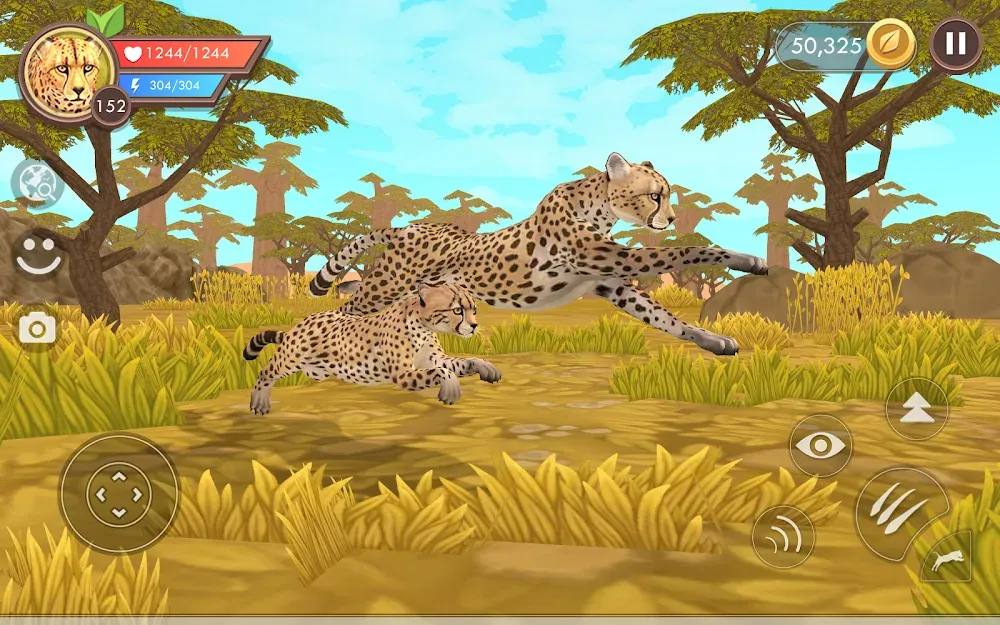
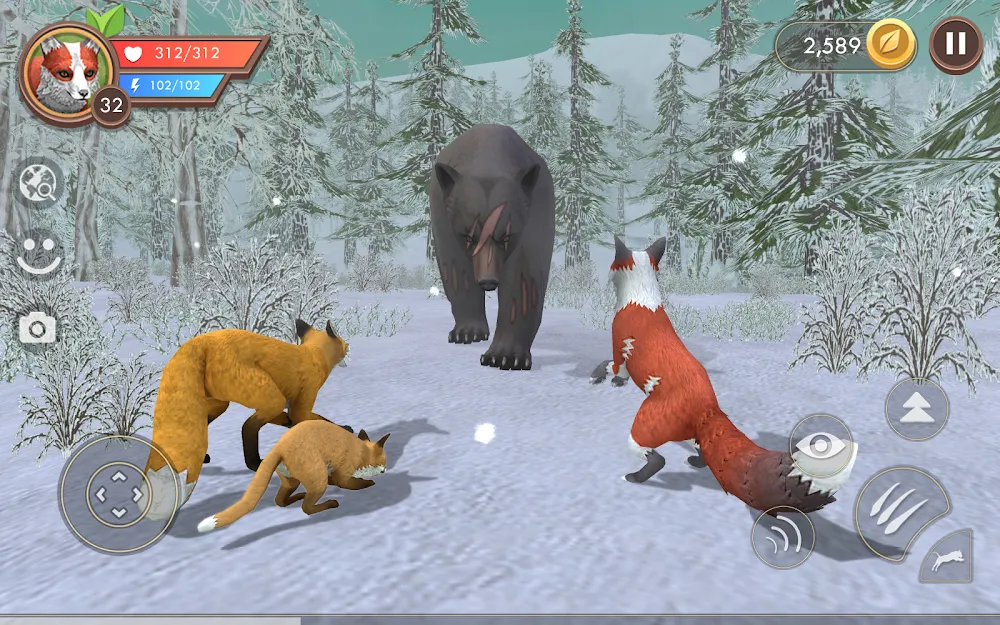
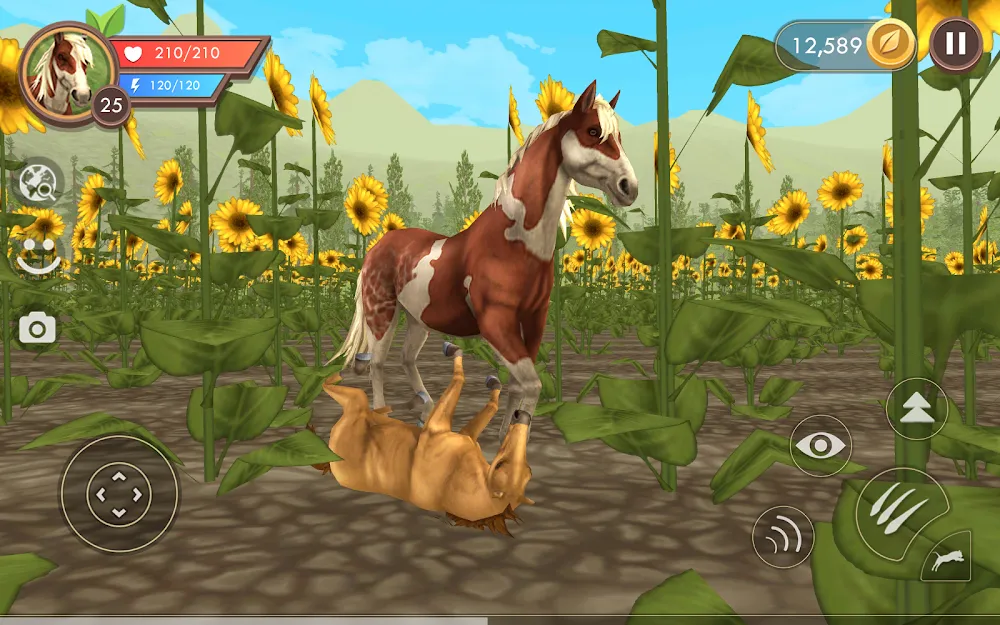
WildCraft: Animal Sim Online is free to start and is published by Turbo Rocket Games. The full store description, the current star average and the developer own screenshots are on the Google Play listing for this game, which is worth reading alongside this review.